
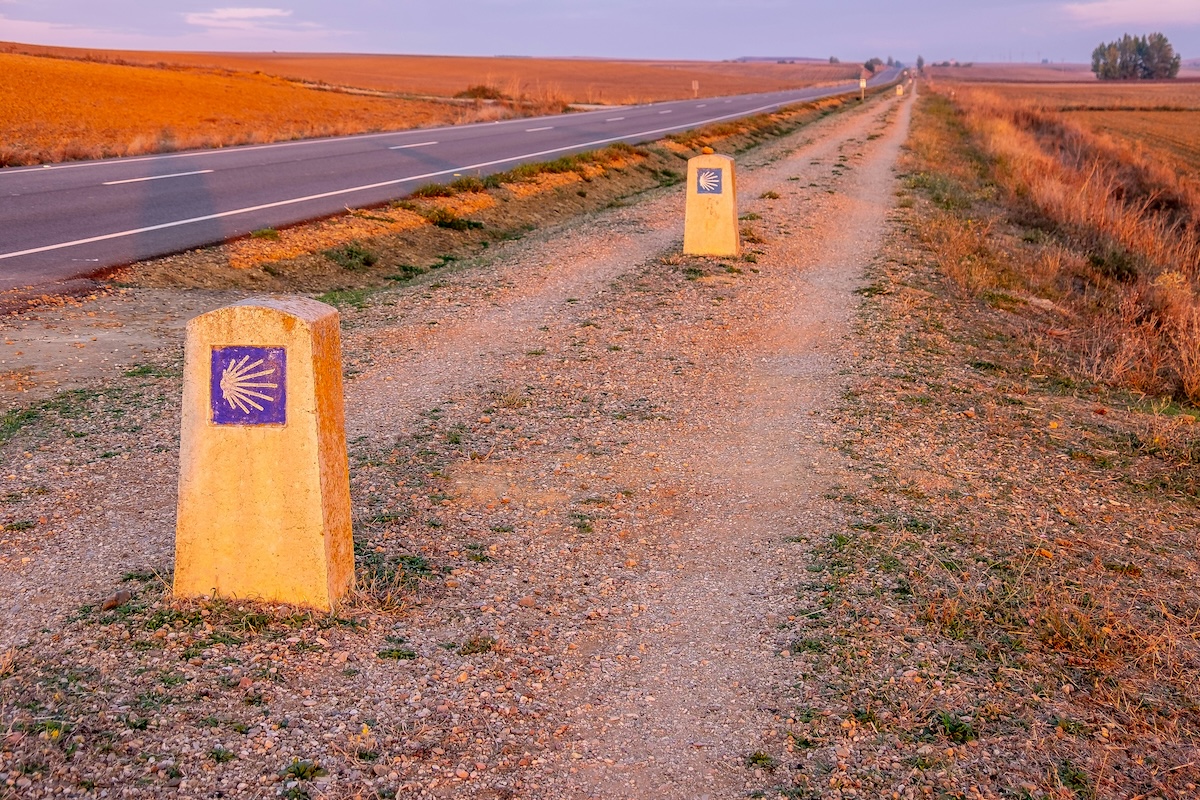
The Centro region is continuing to strengthen its role in the growing network of Camino de Santiago pilgrimage routes, with tourism officials highlighting the importance of the historic paths as both a cultural asset and a sustainable tourism opportunity for inland Portugal.
Turismo Centro de Portugal recently took part in the 1st Meeting of the Camino de Santiago Routes in Portugal, held at the Mosteiro de São Martinho de Tibães in Braga. The event brought together public bodies, tourism organisations and route managers to discuss the future development and certification of the Portuguese Camino routes.
According to Turismo Centro de Portugal, the Camino routes are increasingly seen as a strategic tourism product capable of attracting visitors throughout the year while helping smaller towns and rural areas benefit from tourism in a more sustainable way.
Sílvia Ribau, Director of Strategy and Operations at Turismo Centro de Portugal, described the Caminos as “a tourism product with enormous potential” that combines heritage, nature and spirituality. She also stressed that certification has helped improve safety, infrastructure and the overall experience for pilgrims.
Certified Routes Through Central Portugal
One of the region’s key routes is the Caminho Português de Santiago Central – Região Centro, officially certified in 2023. The route covers almost 192 kilometres within Central Portugal and passes through 12 municipalities including Tomar, Coimbra, Mealhada, Águeda and Albergaria-a-Velha before continuing north towards Santiago de Compostela in Spain.
Another important inland route is the Caminho Português Interior de Santiago, which begins in Viseu and heads north through the interior towards Chaves before crossing into Spain. The route was certified in 2021 and has become increasingly popular with pilgrims looking for quieter and more rural alternatives to the busier coastal paths.
The growing focus on inland Camino routes is particularly significant for the Beiras and other low-density regions, where pilgrimage tourism can help support accommodation providers, cafés, local businesses and heritage sites outside the traditional summer tourism season.
Via da Estrela Included in New Santiago Route Guide
Turismo Centro de Portugal has also recently launched a new “Roteiro dos Caminhos de Santiago no Centro de Portugal” guide bringing together seven Camino routes that cross the region. These include:
-
Caminho Central
-
Caminho Português do Interior
-
Caminho de Torres
-
Caminho Portugal Nascente
-
Caminho Marítimo
-
Caminho do Ocidente
-
Via da Estrela
The Via da Estrela route is particularly notable for inland travellers and walkers interested in Serra da Estrela and the historic Beira Interior region. Several of the routes are already certified, while others remain under development or in the certification process.
A Growing Form of Sustainable Tourism
The Camino de Santiago network has seen increasing international interest in recent years, with many walkers seeking experiences focused on nature, slow travel, spirituality and cultural heritage. The Portuguese routes have become especially attractive because they combine historic towns, rural landscapes and relatively uncrowded paths.
For Central Portugal, tourism officials believe the Camino network represents an opportunity to bring visitors deeper into the country’s interior while preserving local traditions and encouraging sustainable tourism development.
Sources
-
https://turismodocentro.pt/2026/04/centro-de-portugal-reforca-posicionamento-nos-caminhos-de-santiago/
-
https://maisbeiras.sapo.pt/turismo-centro-de-portugal-reforca-posicionamento-nos-caminhos-de-santiago
-
https://turisver.pt/centro-de-portugal-reforca-posicionamento-nos-caminhos-de-santiago/